
Why should I have a social media theme?
We often talk about content strategy, but far less about the design systems that make that strategy easy to execute. Social media moves fast, and brands are expected to keep up without losing their identity. One of the simplest ways to do that is a theme or a system of elements that supports your marketing. So without further ado, allow me to list a few reasons why this could be a solution worth your consideration.
Brand awareness
With social media being the go-to tool for most brands, it’s important to create a consistent image because consistency builds familiarity and, over time, trust. A bespoke brand theme becomes part of your visual language and gradually becomes associated with your business. That means you’re more easily recognised in the ocean of posts.
The system will also immunise you to any fads and trends that so often “inspire” brands to venture out of bounds of guidelines. It will keep you in check, but also give you a space for creativity, so you won't get bored with what you are doing and look for ways to spice things up.
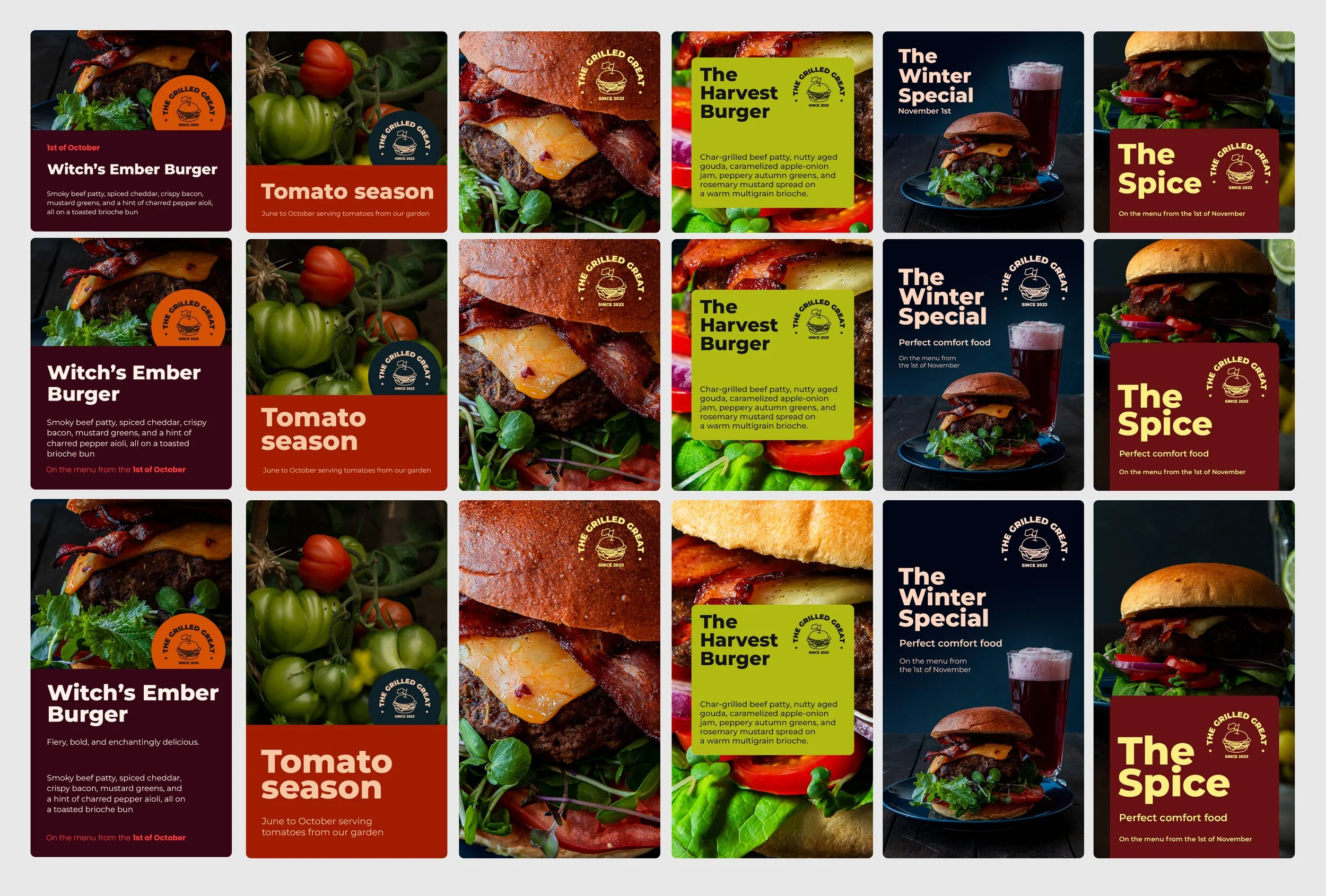
Example - Burger joint theme
In this case, food is the hero. The theme and its elements are there to create space for the copy to sit comfortably within the frame. With photography being the star, I’ve created a few layouts and lockups to give options and to keep the food centre stage. The theme consists of the most common post ratios (1:1, 4:5 and 9:16) used by the most popular social media.
Time saver
I don’t need to tell you how fast media moves or how much time creating assets takes every time you prepare to post. With a system, you’re not starting from scratch each time.
A pre-designed repository of components allows you to react quickly and create content without sacrificing consistency. You won’t be second-guessing your choices, because anything created within the system is, by default, on brand. It also means quicker onboarding if you decide to delegate the task to someone new.
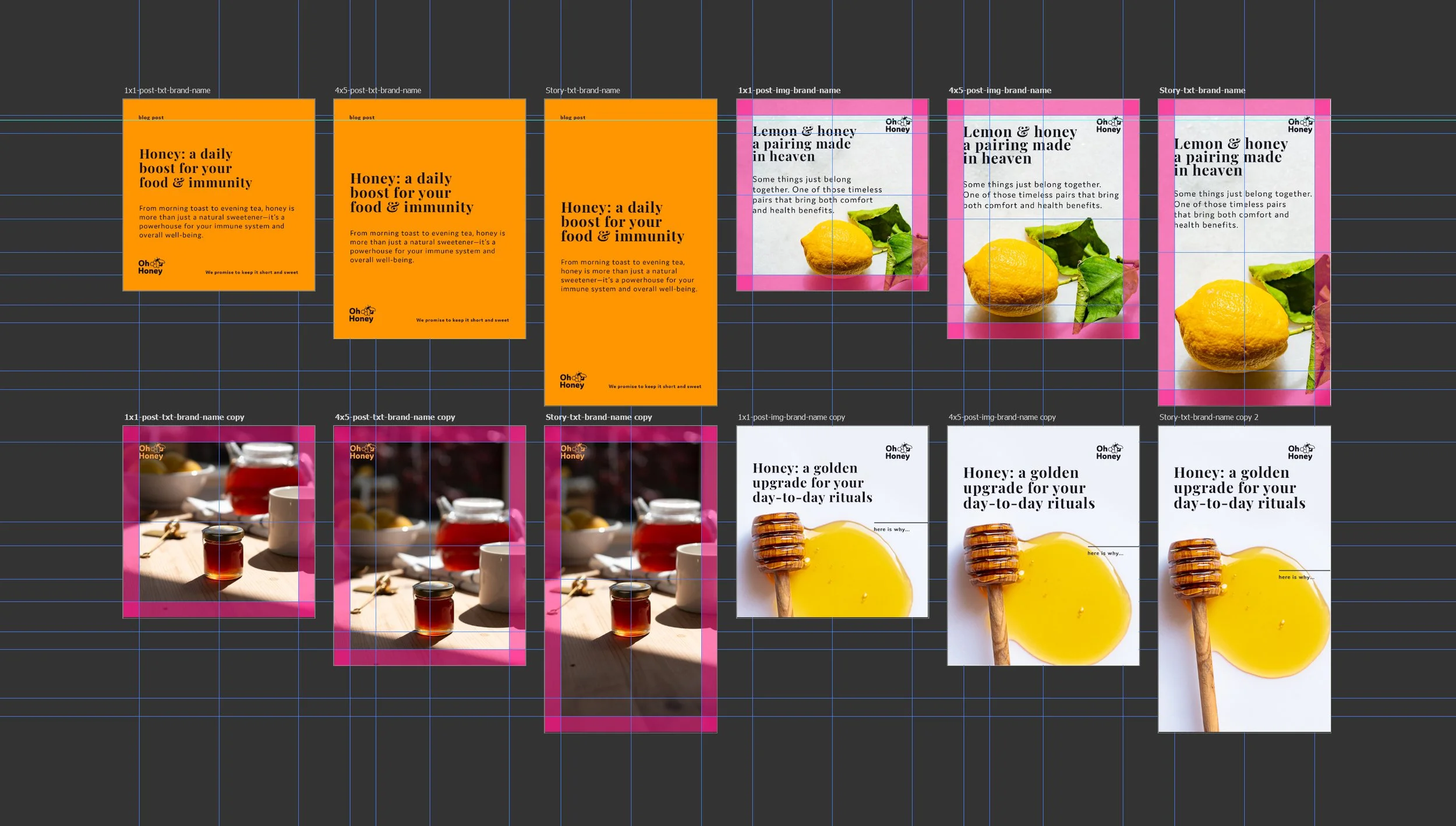
Work in progress file setup
You can start building your own theme today. It can be created easily in Photoshop, Canva or Figma.
Even a basic set will be a massive step towards a smoother creative process and visually consistent content.
First of all, you’ll need to establish a few key elements and set the rules. Identify where your audience can be reached. Once you know the main platforms you’ll be using, find out the best post sizes. For the majority of my clients, I create posts for IG, LinkedIn and Pinterest, which means I can focus on three sizes/ratios. Most universal post sizes I use are 1200 x 1200px (1:1) 1200 x 1500px (4:5) 1080 x 1920px (9:16).
Use your marketing strategy as a guide for the types of posts you’ll use the most. In the example above,
we’re looking to promote the product and weave in lifestyle shots, with the occasional “did you know” carousel. So in this basic set, we have plain text post, text-and-picture post, product shot/lifestyle post,
and a carousel intro post.
On a more practical side, you need to turn the theme file into a bit of a Swiss army knife. Add elements of the visual identity, like fonts, photos, illustrations, colours, and of course, the logo in all its variants and colourways.
This way, you’ll have everything at hand and won’t need to start from scratch each time you’re working on the assets.
Set the safe zone. Above, I’ve set the margins to 100px on each side and marked the centre of each artboard with guidelines. The midpoint is a reference for placing elements and finding balance between them and the frame. Decide where the logo should sit; it can be in one spot or a few, depending on the content layout.
It might sound obvious, so consider this just a reminder to name the layers and elements so the file is easier to navigate for you and for anyone else who might work on your content. And if you are feeling extra, you can also colour-code your layer sets (wink wink nod nod).
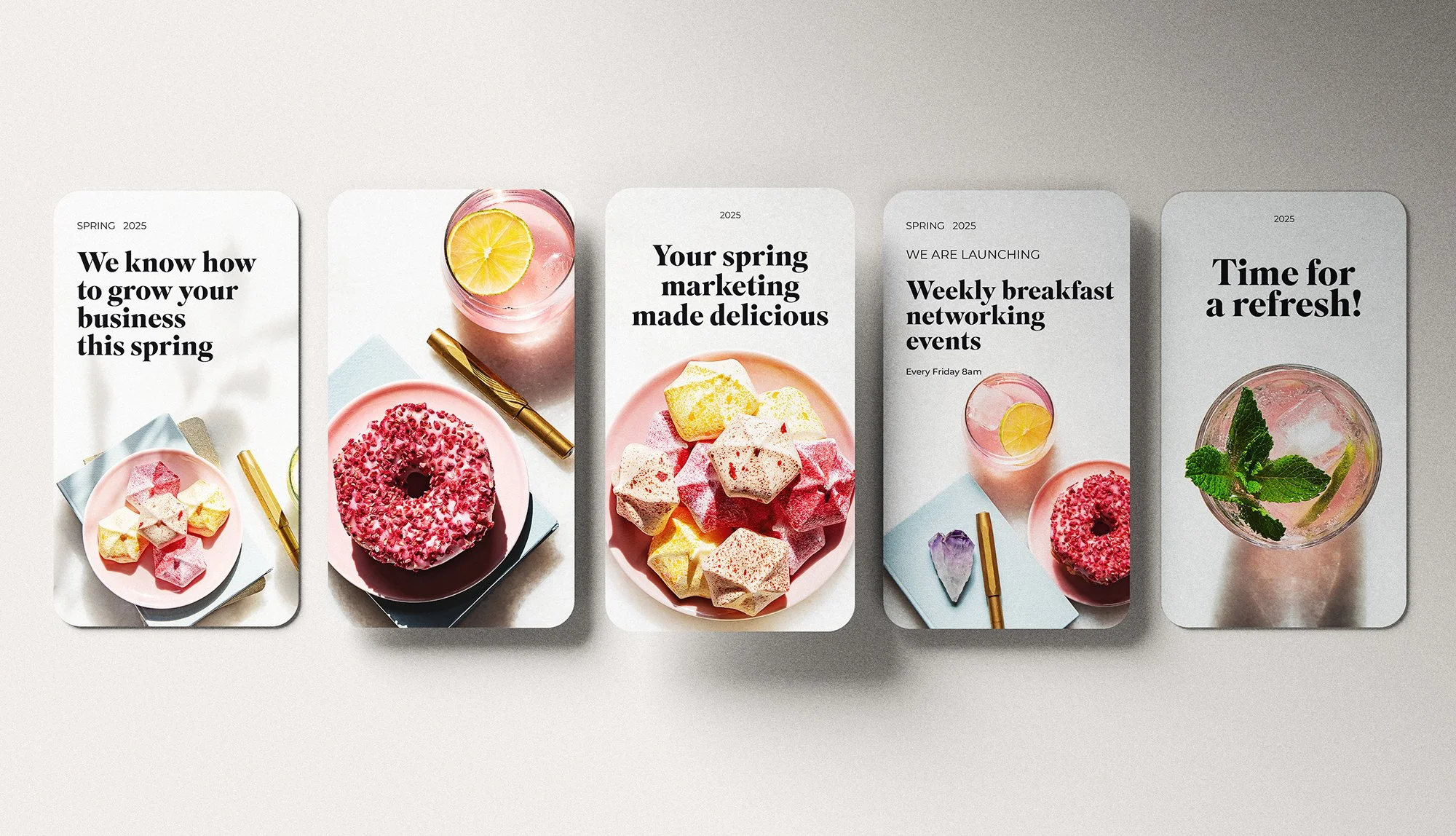

Built to grow
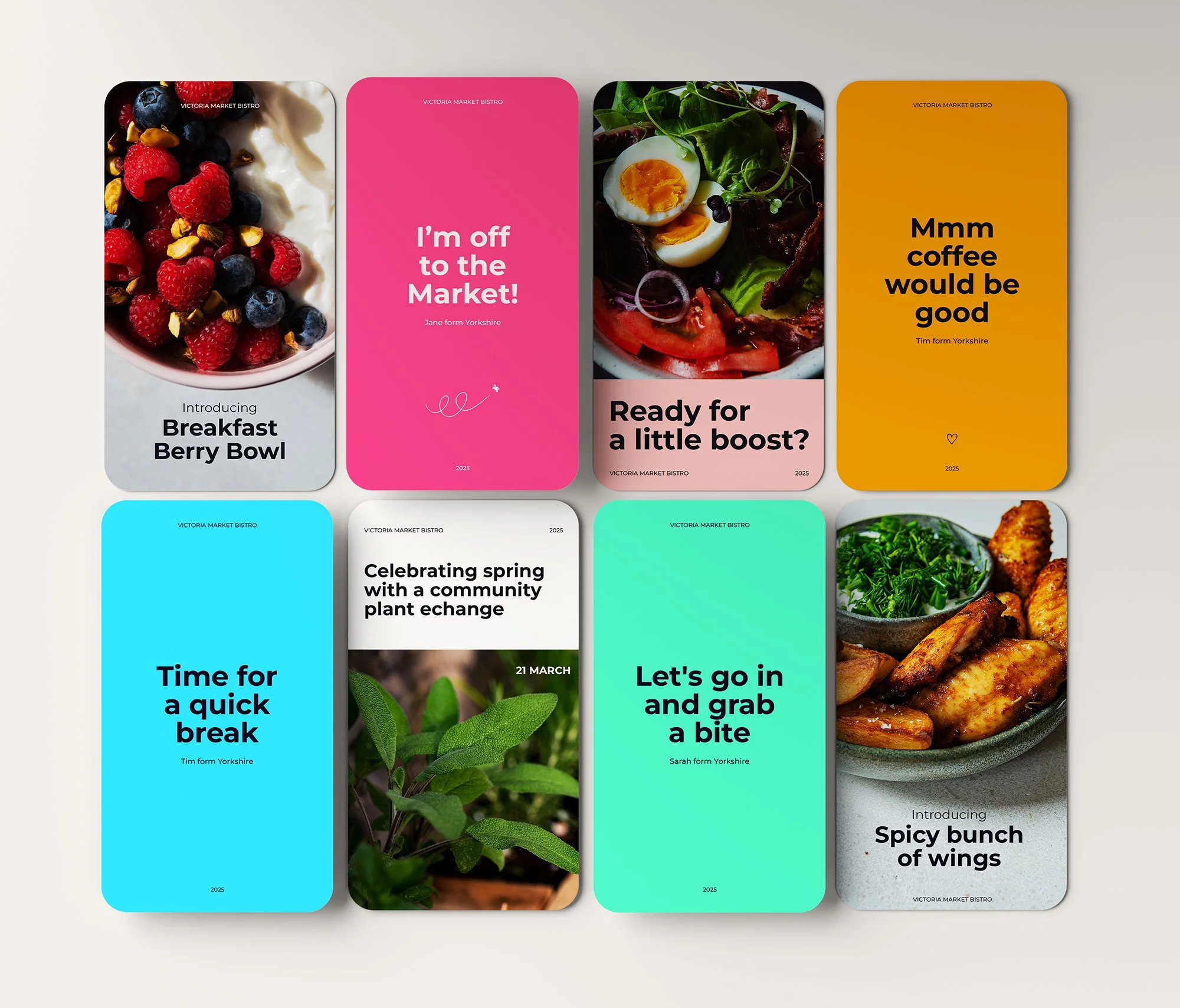
This, in my opinion, is one of the biggest advantages of bespoke systems: they are built with growth as the default. Technology evolves, and we—as consumers—change our habits, tastes and expectations. It’s only natural for brands to grow alongside their audience.
A system can be enriched with new components or changed entirely, element by element, subset by subset. The other advantage of creating a system is that you can start small and develop it as you go. There is no need to go big, anticipating any future uses and needs - those will show up naturally. Identify what the minimum must-have set is and go from there.
So remember, design systems or themes aren’t just for big brands or massive budgets. You can start now and grow it with your brand. Any business that wants clarity, consistency, and efficiency will benefit from one. If you’re ready to make your content work harder, a cohesive visual framework is a very good step forward.